It was a Tuesday. I remember that clearly, because Tuesdays were never supposed to be special.
I was standing in the checkout line at a grocery store, holding a basket with milk, bread, and some vegetables I don’t even remember picking. The cashier said something to me, probably “cash or card?“ and I couldn’t answer. My chest felt like someone had wrapped a rope around it and pulled tight. My hands went cold and clammy at the same time. The fluorescent lights above suddenly felt too bright, too loud, too much. My heart wasn’t just beating fast it felt like it was trying to escape my body.
I thought I was dying.
I put the basket down, mumbled something incoherent, and walked out of the store. I sat on the curb outside, gasping, convinced I was having a heart attack in front of strangers who were just trying to buy their groceries in peace.
That was my first panic attack.and It would not be my last.
Fear thrives on the unknown. The moment I understood my own brain, the panic started losing its grip.”
The Shame That Follows the Fear
If you’ve had one, you know the fear itself is only half the story. The other half is what comes after the shame. The replaying of the moment in your head. I was wondering if people saw. The fear of another one happening, which, ironically, is one of the biggest triggers for the next one.
For weeks after that day, I avoided that grocery store .
Then I started avoiding crowded places in general. My world got smaller, one avoided the situation at a time.
What changed everything for me wasn’t a pep talk or a self-help quote. It was understanding, in actual scientific terms, what my brain and body had done to me that day. Once I understood the mechanism, the fear will losing its grip because fear thrives on the unknown, and I finally will have the answers.
What a Panic Attack Actually Is, Biologically
Here’s the part that surprised me most: my body wasn’t malfunctioning. It was working exactly as designed just aimed at the wrong target.
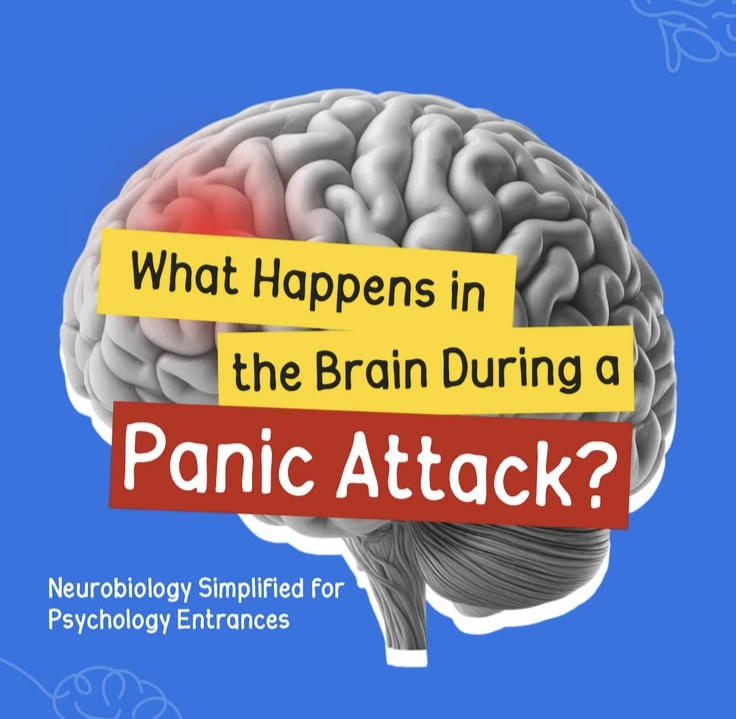
Deep inside the brain sits a small, almond-shaped structure called the amygdala. Its job is to detect threats and sound the alarm. In a genuine emergency say, a car swerving toward you , the amygdala triggers the fight-or-flight response in milliseconds flooding your body with adrenaline and cortisol before your conscious mind even catches up.
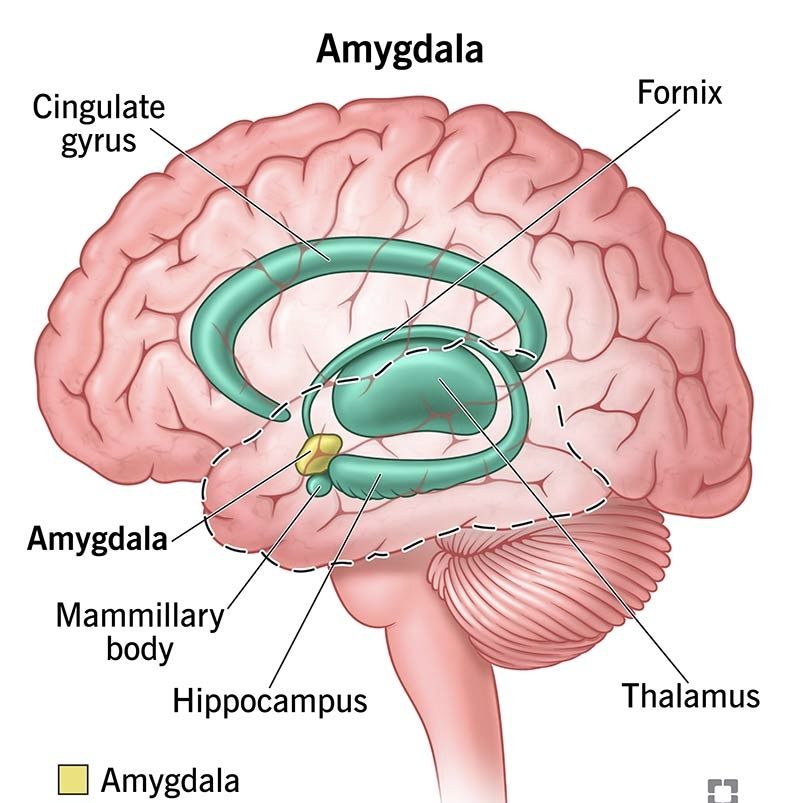
During a panic attack, researchers believe the amygdala essentially fires a false alarm. There’s no actual danger, but the brain’s threat-detection system reacts as if there is. Your heart races to pump more blood to your muscles. Your breathing quickens to take in more oxygen. Your senses sharpen. Digestion pauses, which is why nausea is so common. Every single symptom the racing heart, the tight chest, the dizziness, the tingling hands is your body preparing you to either fight a threat or run from one. The problem is, there’s nothing to fight and nowhere to run.
Neuroscientists have also found that during a panic attack, activity in the prefrontal cortex the rational, decision-making part of the brain , actually decreases, while activity in the amygdala spikes. This is why logical thoughts like “I’m not actually dying” feel almost impossible to access at the moment. It’s not a weakness. It’s neurochemistry. Quite literally, the part of your brain responsible for reasoning temporarily takes a back seat to the part responsible for survival.
Why It Feels Like a Heart Attack
One of the cruelest tricks panic attacks play is mimicking cardiac symptoms so convincingly that emergency rooms see thousands of panic-attack patients every year who are certain they’re having a heart attack.
This happens because of a phenomenon tied to breathing. During panic, many people unconsciously hyperventilate breathing too fast and too shallow. This lowers carbon dioxide levels in the blood, a condition called hypocapnia, which causes blood vessels to constrict slightly and can produce dizziness, tingling in the fingers and lips, and even chest tightness. Your body isn’t failing. It’s simply responding to a chemical shift you triggered by breathing differently than usual.
Understanding this changed something for me. The next time I felt an attack building, instead of thinking “I’m dying,” I could think, “My CO2 levels are dropping because I’m breathing too fast . I can fix this.” And I could. Slow, deliberate breathing , inhaling for four counts, holding for four, exhaling for six , which will help to restore that chemical balance and gently signals to the amygdala that the threat has passed.
The Body Keeps Score, Even When the Mind Forgets
What fascinated me most in my research was learning that panic attacks aren’t purely psychological , they’re deeply physiological, and often tied to the body’s stress-response system called the HPA axis (hypothalamic-pituitary-adrenal axis). Chronic stress, unresolved anxiety, poor sleep, and even excessive caffeine can prime this system to be hypersensitive, making false alarms more likely.
This explained so much of my own history. I hadn’t slept well in weeks before that grocery store afternoon. I’d been running on coffee and stress, ignoring warning signs my body had been sending for days. The panic attack wasn’t random. It was my nervous system finally sending an alert I couldn’t ignore.
Learning to Work With My Brain, Not Against It
Recovery didn’t happen overnight, and it wasn’t about eliminating fear entirely , it was about changing my relationship with it. A few things that genuinely helped, backed by both research and lived experience:Grounding techniques, like–
1.Naming five things
I could see, four I could touch, and three I could hear, which help re-engage the prefrontal cortex and pull attention away from the amygdala’s alarm.
2.Slow diaphragmatic breathing.
which activates the vagus nerve and shifts the body from fight-or-flight into what’s called the parasympathetic “rest and digest” state.
3.Cognitive Behavioral Therapy (CBT).
which research consistently shows is one of the most effective treatments for panic disorder, because it helps rewire the thought patterns that fuel the fear-of-fear cycle.
4.Regular sleep and reduced caffeine.
which lowered my baseline nervous system sensitivity over time.
None of these made panic attacks vanish immediately. But each one gave me a tool, and each tool gave me back a little bit of control.
The Grocery Store, Revisited
Months later, I walked back into that same store. Same fluorescent lights, same checkout line. My heart still sped up a little old memories linger in the body. But this time, I recognized the feeling for what it was: an overprotective alarm system, not a life-threatening emergency. I breathed slowly. I stayed present. I bought my groceries and walked out, unremarkably, like anyone else.
That ordinary moment felt quiet victory.
If you’ve had a panic attack, you’re not broken, and you’re not alone , panic disorder affects millions of people worldwide, and it’s profoundly treatable. Understanding what’s happening inside your brain during an attack doesn’t make the fear disappear instantly, but it does make it less mysterious. And mystery, more than anything, is what fear feeds on.
————————————————
*This post is for informational purposes only and reflects personal experience alongside general research on panic and anxiety. If panic attacks are affecting your daily life, please consider speaking with a doctor or mental health professional , you deserve support, not just survival.*

