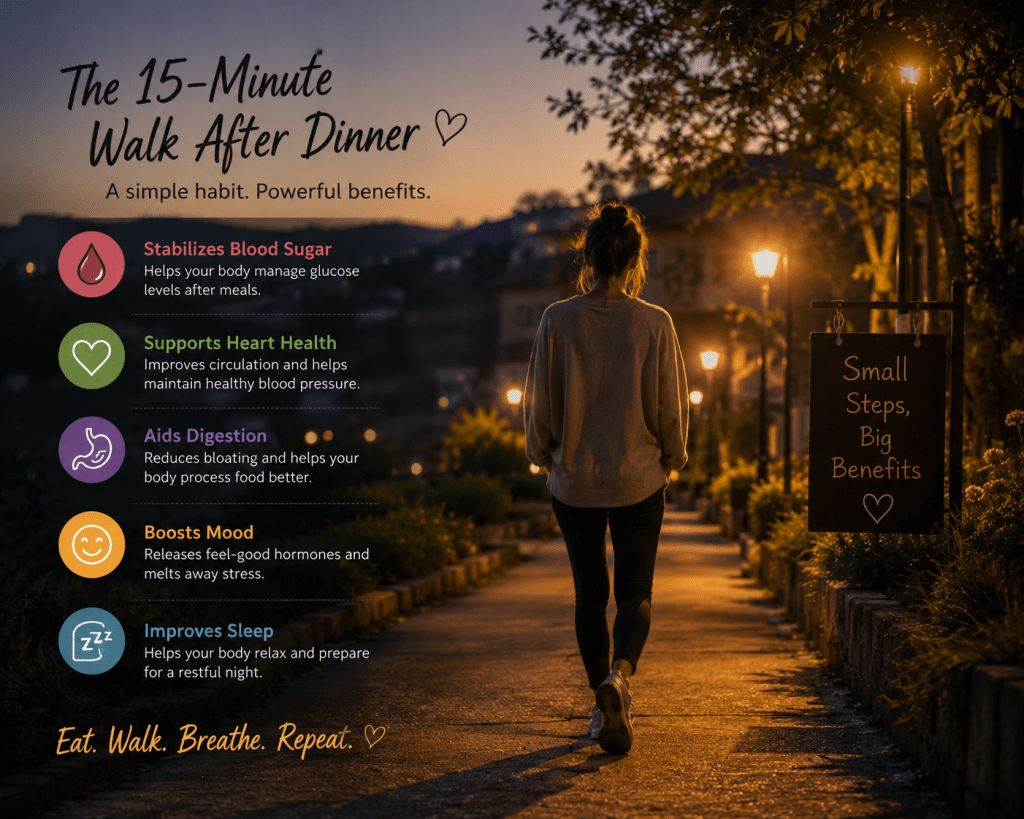
Every evening, my neighbour followed the same routine.
Dinner. Television. Sofa.
Then, a few months ago, he changed one small thing.
After dinner, he started walking.
Not for an hour. Not to lose weight. Not because he suddenly became a fitness enthusiast.
Just 15 minutes around the neighbourhood.
When I asked him why, he smiled and said, “I simply feel better afterwards.”
That simple habit has more science behind it than we might imagine.
What happens when you walk after eating?
Dinner doesn’t end when we leave the table.
Our body is busy digesting the food, and blood glucose naturally rises after a meal. When we walk, our working muscles use glucose for energy.
Research has found that walking or other light exercise after a meal can reduce the post-meal rise in blood sugar, compared with remaining inactive.
And here’s the interesting part:
You don’t need an intense workout.
Even a short, gentle walk can make a difference.
That’s good news for those of us who don’t have an hour to spend at the gym.
Your legs: the body’s “second heart”
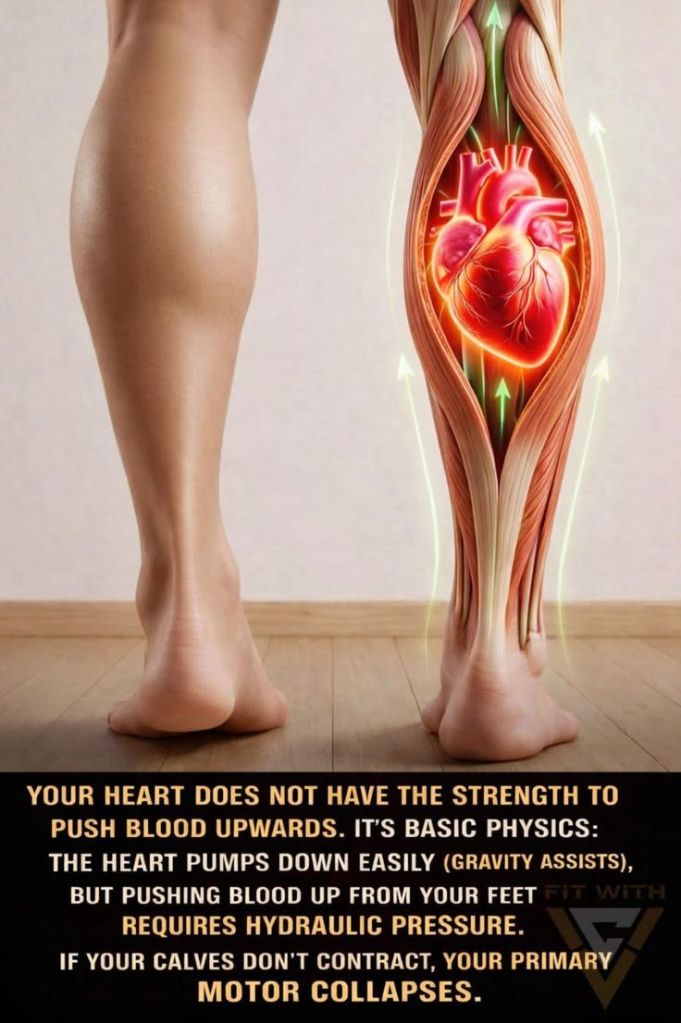
There is a popular saying that our legs have a “second heart.”
Of course, they don’t literally have another heart.
But there is a fascinating reason behind the phrase.
Our calf muscles act as a muscle pump. When we walk, these muscles contract and squeeze the veins in our lower legs, helping push blood back toward the heart. One-way valves in the veins help keep that blood moving in the right direction.
So every step is doing more than taking us somewhere.
Our legs are helping our circulation.
Perhaps that’s one reason sitting for hours can leave our legs feeling heavy, while a short walk can make us feel refreshed.
And then there is something science can’t easily measure
An after-dinner walk creates a small pause between the day’s responsibilities and bedtime.
You step outside.
You breathe.
You see the evening sky.
Maybe you talk to someone. Maybe you walk alone.
For fifteen minutes, you’re not answering messages, watching television or scrolling through a screen.
You’re simply moving.
And sometimes, that’s exactly what the body and the mind needs.
Try the “Dinner + 15” habit
For one week, try this simple experiment.
After dinner, put on comfortable shoes and walk gently for 10–20 minutes.
Don’t worry about speed.
Don’t count every step.
Don’t treat the walk as punishment for what you ate.
You’re not walking to earn your dinner. You’re walking because your body deserves movement.
My neighbour still follows his little ritual.
Some evenings he walks for ten minutes. Some evenings twenty.
And when I asked him recently whether it had changed his life, he laughed.
“Not my life,” he said. “Just my evenings.”
Maybe that’s enough.
Because sometimes the healthiest habits aren’t dramatic.
They’re the small ones we can actually keep doing.
Eat. Walk. Breathe. Repeat.
Your body may quietly thank you for all four.
Note for publication: The research supports post-meal physical activity, particularly its effects on postprandial glucose, but it does not mean that walking after dinner prevents or treats disease by itself. People with diabetes or medications that can cause low blood sugar should follow their clinician’s advice when changing exercise routines.

