What’s a piece of technology you’re convinced will exist in 20 years?
Have you ever watched an old science fiction movie and smiled at how impossible some of those inventions once seemed?
Video calls, smart watches, voice assistants, and even cars that can park themselves were once considered fantasy. Today, they’re part of everyday life.
So here’s a question worth thinking about:
What technology will feel completely normal 20 years from now?
For me, the answer is simple.
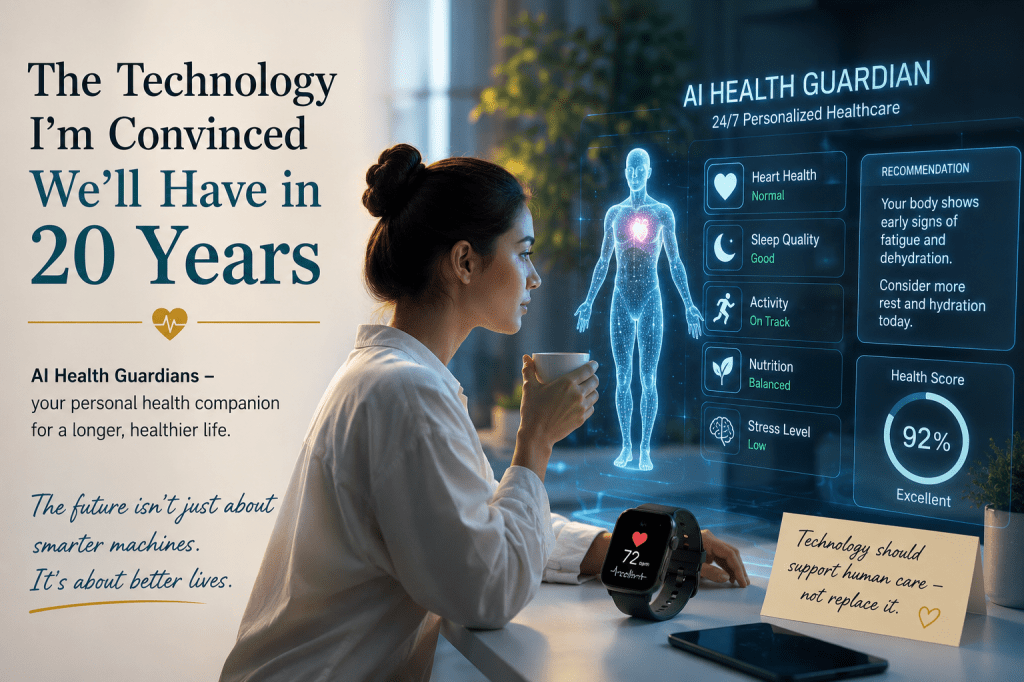
AI Health Guardians
I believe that within the next two decades, almost everyone will have a personal AI health companion—not just an app, but an intelligent assistant that quietly watches over our well-being 24 hours a day.
Imagine waking up in the morning, and your AI says:
“Your body temperature has been slightly higher than usual for two days. Your sleep quality has dropped, and your heart rate suggests you’re fighting an infection. It would be wise to visit your doctor before symptoms become serious.”
It won’t be guessing.
It will combine information from wearable devices, medical history, genetics (if you choose to share it), diet, exercise, and environmental data to provide personalized health advice.
We’re Already Seeing the Beginning
This may sound futuristic, but the first steps are already here.
Smartwatches can monitor heart rhythms, measure blood oxygen levels, track sleep, and even detect falls. Artificial intelligence is already helping doctors identify diseases from medical images more quickly and accurately in many hospitals.
These technologies are still developing, but together they point toward something much bigger.
Prevention Instead of Treatment
One of the biggest changes will be a shift from treating illness to preventing it.
Instead of waiting until we become seriously sick, AI could spot tiny warning signs weeks or even months earlier.
Early detection could save lives by identifying conditions such as heart disease, diabetes, and some forms of cancer before they become severe.
A Human Touch Still Matters
As exciting as technology is, I don’t believe AI will replace doctors, nurses, or caregivers.
Medicine is more than numbers and reports.
Sometimes, what a patient needs most is a reassuring smile, a kind conversation, or someone who truly listens.
Technology should support human care ,not replace it.
A Future Worth Looking Forward To
Twenty years from now, our phones may no longer be the most important device we own.
Instead, our invisible AI health companion could become our daily wellness partner, helping us make healthier choices, catch illnesses earlier, and live longer, healthier lives.
The future isn’t just about smarter machines.
It’s about using technology to make human life better.
And that’s a future I’m genuinely excited to see.
«”The best technology doesn’t replace humanity—it helps us care for it better.”»

